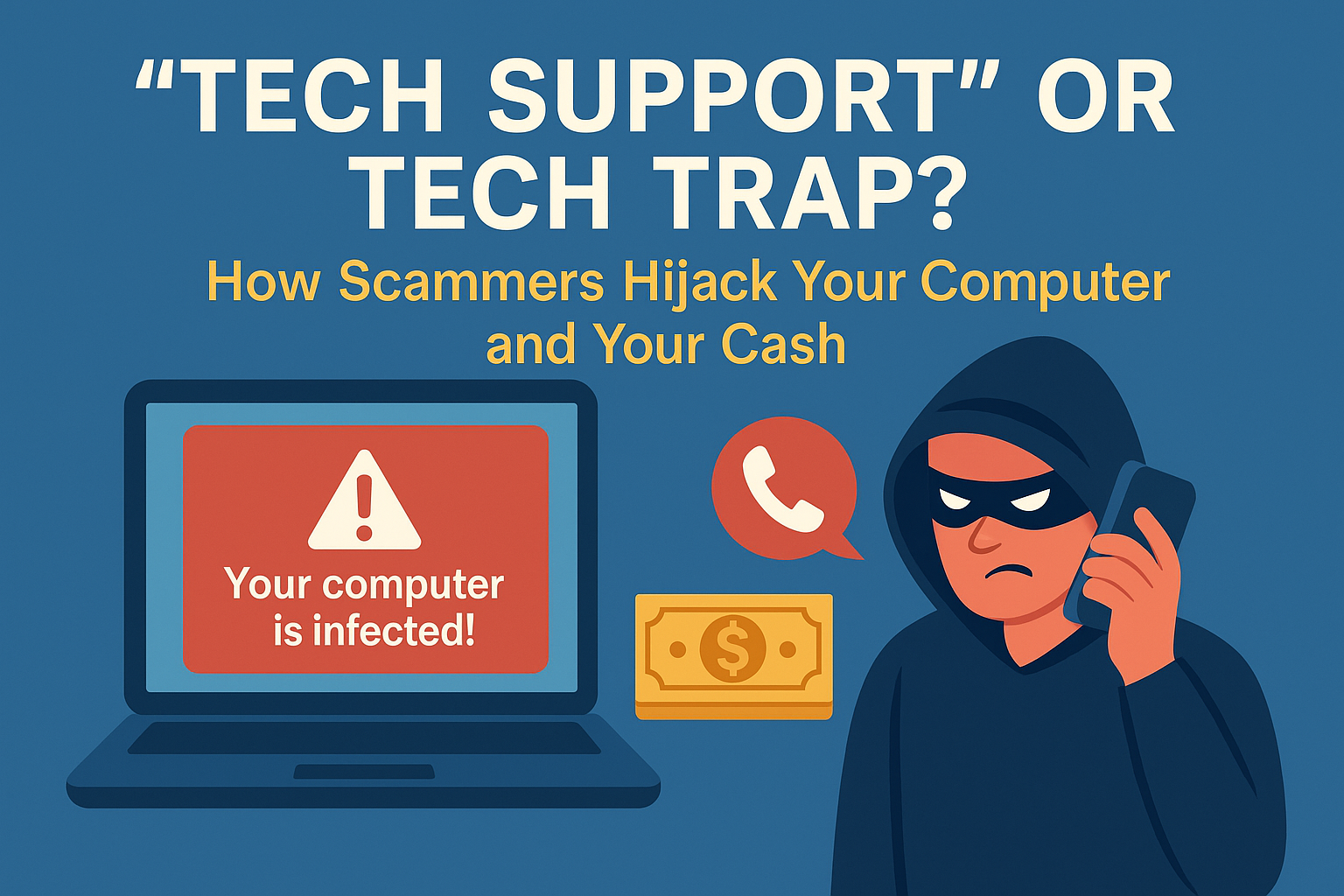
Last Tuesday, Linda was working on her laptop when a bright red pop-up filled the screen. It blared: “Your computer is infected! Call Microsoft immediately!” The message even had a toll-free number and an official-looking logo. Panicked, she dialed. Within seconds, a polite voice claiming to be “a certified Microsoft technician” told her that hackers had stolen her banking details and the only way to stop them was to grant him remote access to her computer. He said it was urgent — if she didn’t act now, she could lose everything.
What Linda didn’t know was that this was no technician. He was a scammer. If she had followed his instructions, he could have installed malicious software, locked her out of her accounts, drained her funds, or stolen her personal data to sell on the dark web.
Tech support scams like this prey on fear and urgency. The criminals use fake pop-ups, spoofed caller IDs, and scripted scare tactics to pressure victims into giving them control or paying for fake “repairs.” They often demand payment in gift cards, cryptocurrency, or wire transfers — forms of payment that are nearly impossible to trace or reverse.
The best defense is awareness. Real tech companies will never call you out of the blue or demand payment to fix a problem you didn’t report. If you see a suspicious pop-up or get an unexpected call, hang up, close the browser, and verify directly with the company using the contact information from their official website.
At USCryptoCop, we’re fighting to shut these scams down. We help protect the public by raising awareness, supporting victims, and equipping law enforcement with the tools to track and prosecute the criminals behind these schemes. Every person who learns to spot the warning signs is one less potential victim.
So next time a “technician” calls with urgent news about your computer, remember Linda’s story — and hang up.
#USCryptoCop